Emergency tree removal Florida homeowners may need after a storm often involves more than clearing fallen branches. A damaged tree can threaten a roof, driveway, fence, or nearby power lines. Even a tree that remains standing may have weakened roots or hanging limbs that are difficult to recognize from the ground.
After severe weather in Wesley Chapel, Tampa Bay, or elsewhere in Florida, the first priority is keeping people safe. This guide explains what to do immediately, when professional help is needed, and how to prepare for an emergency tree removal estimate.
 ]
When Is Emergency Tree Removal Necessary?
Not every broken branch requires an emergency response. However, some situations create an immediate risk to people or property and should be assessed without delay.
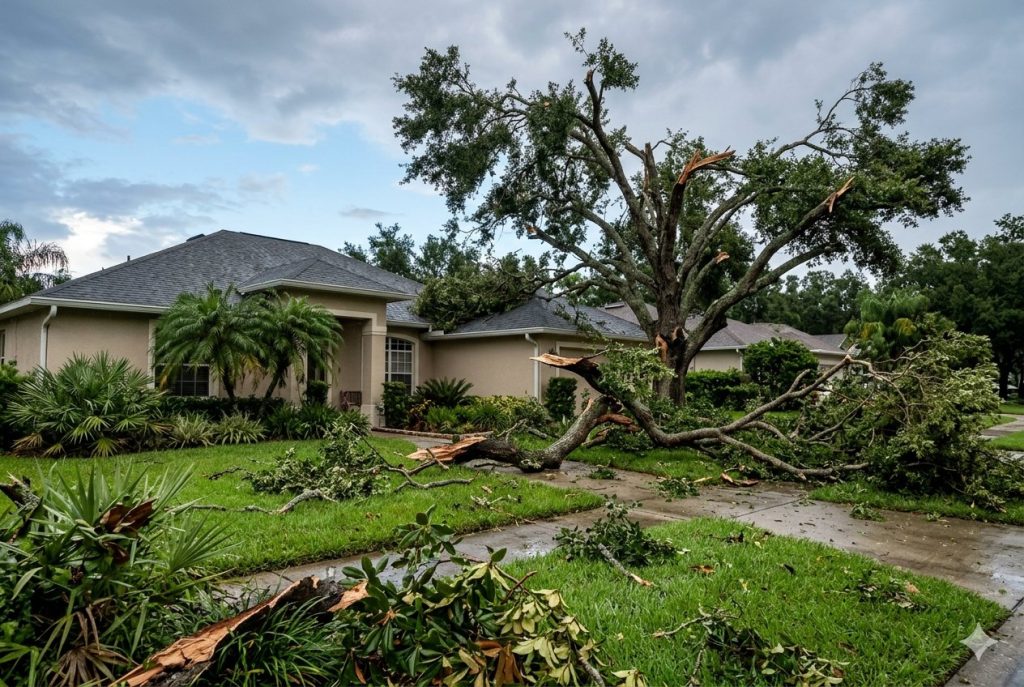
Warning signs may include a tree resting on a building, a trunk that has split, newly exposed roots, large hanging limbs, or a tree leaning noticeably after a storm. A fallen tree blocking the only safe exit from a property may also require urgent attention.
Never assume a damaged tree is stable simply because it has not fallen completely. Branches and trunks can shift unexpectedly, especially when they are under tension.
7 Steps to Take After a Storm Damages a Tree
1. Keep Everyone Away From the Damaged Tree
Move family members and pets away from fallen trees, broken branches, and unstable trunks. Do not stand beneath hanging limbs or attempt to pull branches free.
If a tree has damaged a house, avoid affected rooms until it is safe to enter. Where there is an immediate threat to life or a serious emergency, contact local emergency services.
2. Watch for Downed Power Lines
A tree touching an electrical line is especially dangerous. Treat every downed wire as energized, even if it appears inactive. Electricity can travel through wet branches, fences, and nearby surfaces.
Stay clear of the area and contact the electric utility. Do not touch the tree, move debris, or allow anyone to use cutting equipment near the wires. Utility-related hazards must be addressed by the appropriate qualified personnel.
3. Document Damage From a Safe Location
When it is safe, photograph the tree and any visible property damage. Take wide photos showing the surrounding area and closer images only from a safe distance.
These photographs can help explain the situation to a tree care provider and may also support discussions with an insurance company. Do not enter an unsafe area solely to obtain pictures.
4. Check Whether the Tree Is Still Unstable
Storm damage is not always obvious. Cracks in a trunk, newly lifted soil around roots, broken major limbs, and sudden changes in a tree’s lean can indicate structural problems.
Do not attempt to test the tree by pushing it or cutting a branch. A qualified tree care professional can evaluate whether pruning, temporary risk reduction, or removal is appropriate.
5. Contact Qualified Tree Care Providers
When requesting emergency tree removal Florida service, explain the location, tree condition, nearby buildings, and any access restrictions. Mention whether the tree is on a roof, blocking a driveway, or close to electrical equipment.
Ask prospective providers about relevant experience, insurance, equipment, and their proposed approach to the hazard. Emergency work still requires careful planning and appropriate safety procedures.
6. Confirm the Scope and Written Estimate
Before authorizing work, whenever conditions permit, ask for a written description of what will be removed, how debris will be handled, and whether stump grinding or additional cleanup is included.
Emergency scheduling and hazardous conditions can affect pricing. Avoid assuming that an initial telephone estimate is the final price for a complex removal.
7. Plan Cleanup and Follow-Up Tree Care
Once immediate hazards are controlled, review the remaining debris and nearby trees. Some trees may need further inspection or corrective pruning, while others may recover without removal.
Ask the provider whether additional work is necessary and whether it can be scheduled separately from the emergency response.
How to Recognize Different Levels of Tree Damage
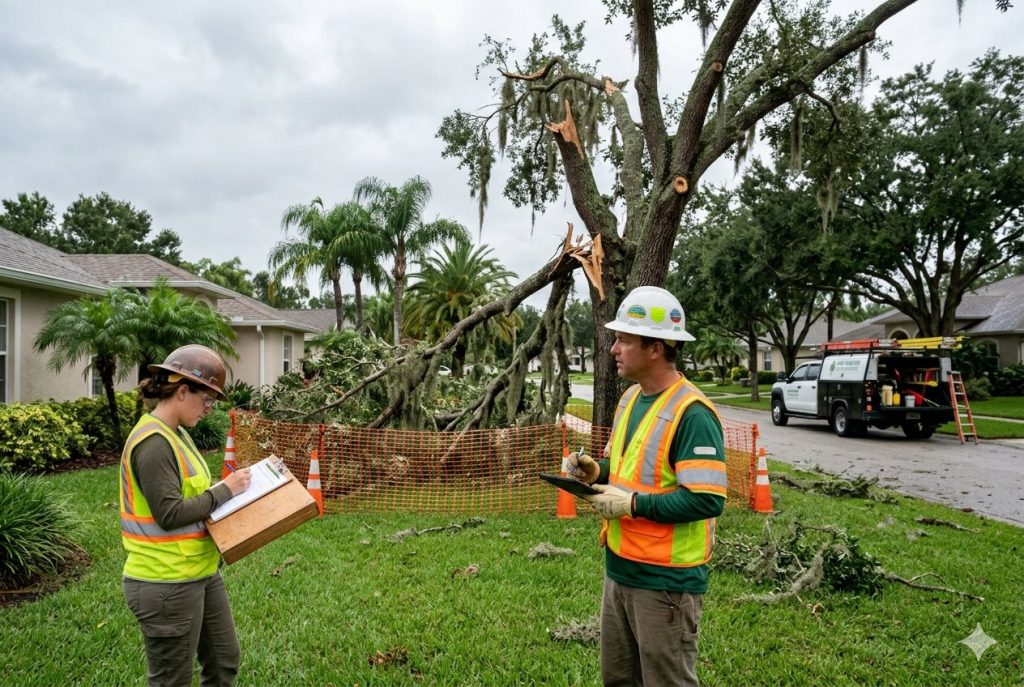
Use the following table as a general guide. It does not replace an on-site professional assessment.
| Situation | Recommended Response |
|---|---|
| Tree or branch touching a power line | Keep clear and contact the utility immediately. |
| Tree on a home with possible occupants at risk | Move to safety and contact emergency services when needed. |
| Large hanging limb over a driveway or entrance | Restrict access and request prompt professional assessment. |
| Newly leaning tree with exposed roots | Keep away and seek professional evaluation. |
| Small fallen branches in an open, safe area | Arrange routine cleanup when conditions are safe. |
| Minor canopy damage without an immediate hazard | Consider a scheduled tree health and safety inspection. |
Weather conditions can change quickly. If you are uncertain about a tree’s stability, keep your distance and seek qualified advice.
 ]
What Affects Emergency Tree Removal Costs in Florida?
Emergency tree removal costs depend on the actual conditions at the property. The most important factors often include tree size, the severity of damage, access for equipment, proximity to structures, and the complexity of safely dismantling the tree.
A tree lying in an open yard is generally a different project from one resting on a roof or tangled among other branches. Debris hauling, stump grinding, and additional site protection may also affect the estimate.
For a more detailed explanation of pricing considerations, homeowners can review the related tree removal cost guide on Florida Tree Connect once its published URL is available.
Ask for a clear written estimate whenever practical. Confirm what is included, what may cost extra, and how changes will be approved.
Insurance, Documentation, and Storm Cleanup
Homeowners sometimes assume that insurance will automatically pay for any tree that falls during a storm. Actual coverage depends on the policy, the cause of damage, and the circumstances of the loss.
Contact your insurer or insurance agent to understand your policy’s requirements. Keep relevant photographs, estimates, invoices, and records of communication.
Do not delay an essential safety response merely to collect paperwork. At the same time, avoid signing unclear contracts or making payments without understanding the work being authorized.
For general consumer protection advice, the Federal Trade Commission provides resources about avoiding scams and evaluating service offers.
Storm-Damaged Trees in Wesley Chapel and Tampa Bay
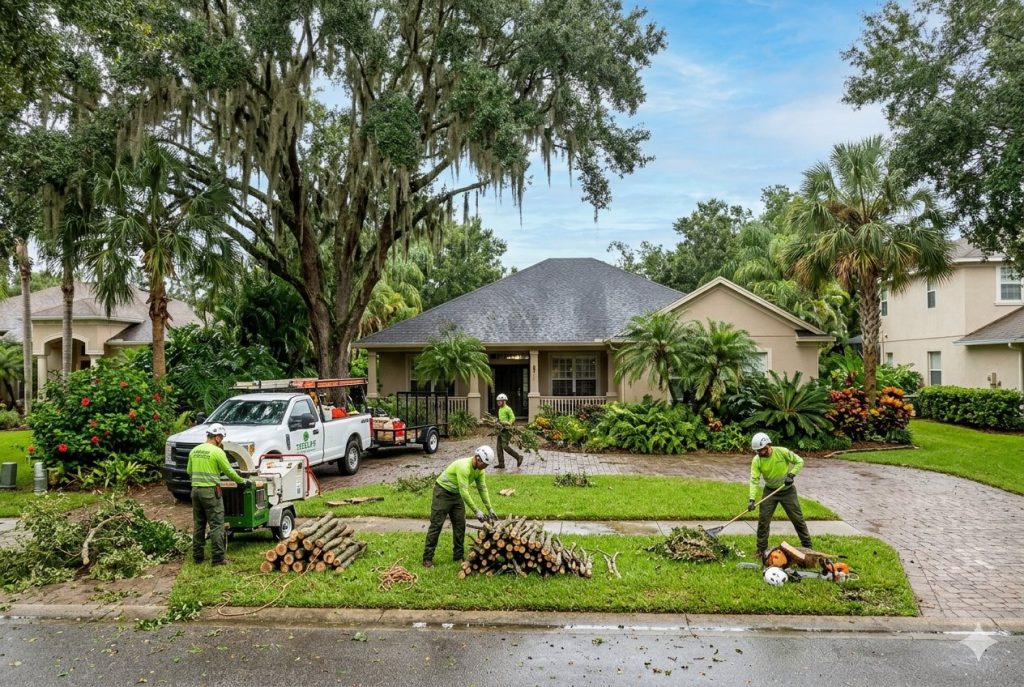
Homes in Wesley Chapel, Tampa, and surrounding communities may have mature oak trees, palms, fenced yards, screened pool enclosures, and landscaping that complicate post-storm cleanup.
After heavy rain and strong winds, homeowners should pay attention to broken limbs, newly leaning trees, and changes in the soil around major roots. Even when a tree looks healthy from a distance, hidden damage may require assessment.
The University of Florida IFAS Extension publishes educational resources on trees, hurricane preparation, and landscape management. These resources can help homeowners understand tree care decisions before and after severe weather.
Local permit requirements and rules can vary. Before non-emergency removal, check the applicable local regulations and ask the provider about any required approvals.
 ]
Frequently Asked Questions About Emergency Tree Removal
What Should I Do if a Tree Falls on My House?
Keep everyone away from the affected area. If there is an immediate threat to life, call emergency services. Avoid entering damaged rooms until it is safe, and contact qualified professionals and your insurer.
Who Should I Call if a Tree Touches a Power Line?
Stay away from the tree and wire and contact the electric utility. Do not attempt to cut, move, or touch anything in contact with the line.
Is Every Storm-Damaged Tree Dangerous?
No. Some trees recover after losing smaller branches, while others develop serious structural hazards. A qualified assessment can help determine the appropriate response.
Does Homeowners Insurance Cover Fallen Tree Removal?
Coverage varies by policy and circumstances. Contact your insurer to confirm whether tree removal, debris cleanup, or related property damage is covered.
How Quickly Can Emergency Tree Removal Be Scheduled?
Availability depends on the provider, weather, access conditions, and the severity of the situation. Contact local providers to confirm their current response options rather than assuming a guaranteed arrival time.
Find Tree Care Provider Options After a Storm
If you need information about emergency tree removal Florida options, begin by identifying the location, type of damage, and any immediate safety concerns.
Florida Tree Connect helps homeowners explore connection options with independent tree care providers where available. It is not an emergency response agency, does not directly perform tree removal, and does not guarantee provider availability or response times.
For life-threatening situations or electrical hazards, contact emergency services or the utility first. For non-immediate tree care needs, visit Florida Tree Connect and use the available contact options to describe your project.
