What Are the Most Common Signs Your Tree Needs to Be Removed?
Trees are an essential part of our landscape in Wesley Chapel, Florida. They provide shade, beauty, and increase property value. However, there comes a time when a tree becomes a liability rather than an asset. Knowing the signs your tree needs to be removed is crucial for the safety of your family and home.
If you are noticing strange changes in your trees, it might be time to call a professional. Here are the most common signs your tree needs to be removed.
1. Dead or Dying Branches (Deadwood)
If you see large dead branches hanging in the canopy, this is a major red flag. Deadwood can fall without warning, especially during Florida’s storm season. You can test a branch by snapping it; if it breaks easily and is brown inside, it is dead. If more than 50 percent of the tree is dead, removal is usually the best option.
2. A Leaning Trunk
A sudden lean in a tree is a sign of structural failure. If the tree is leaning towards your house, power lines, or a neighbor’s property, it needs immediate attention. While some trees naturally grow at an angle, a sudden shift indicates root damage or instability. If the lean is accompanied by cracked soil around the base, the tree could fall at any moment.
3. Hollow or Decaying Trunk
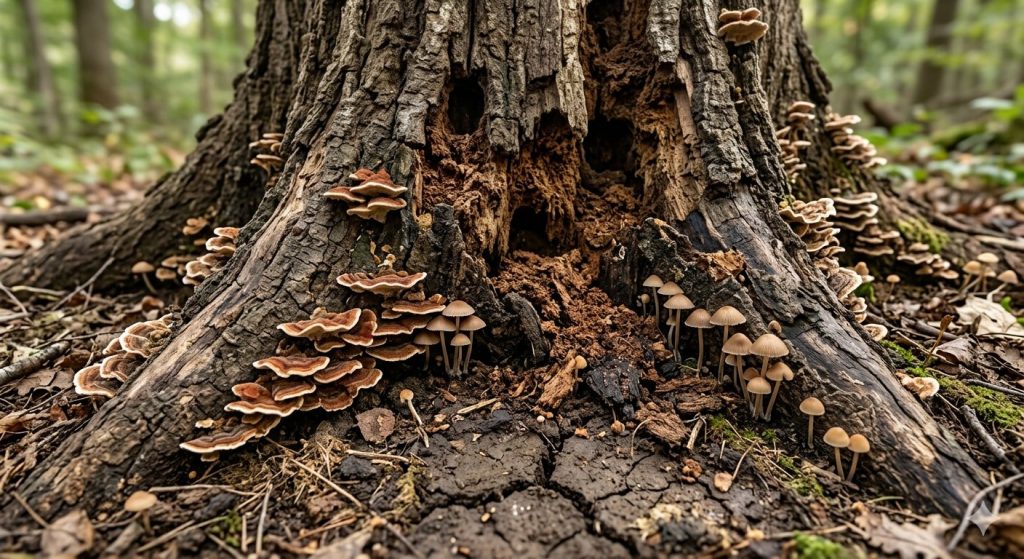
A tree with a hollow trunk is structurally weak. If you notice deep cracks, cavities, or soft, crumbly wood near the base, the tree may not be able to support its own weight. Fungal growth around the base is also a sign of internal rot. A tree with a hollow trunk is a hazard that requires immediate removal.
4. Root Damage or Uprooting
The roots are the foundation of the tree. If you see roots that are broken, lifted from the ground, or if the soil around the base is pushed up, the tree is at risk of falling. Construction, landscaping, or severe flooding can damage roots. Without a strong root system, the tree cannot survive.
5. Fungal Growth
Mushrooms or conks growing around the base of the tree are a clear indicator of decay. These fungi feed on dead wood. If you see them, the tree is likely rotting from the inside out. By the time mushrooms appear, the decay is often extensive.
6. Storm Damage
Wesley Chapel is no stranger to hurricanes and severe storms. If a tree has been struck by lightning or has severely broken branches after a storm, it may not recover. It is best to have it evaluated by a professional. Sometimes, storm-damaged trees become “widow makers,” with broken branches hanging precariously overhead. In these cases, the signs your tree needs to be removed are undeniable.
7. Proximity to Structures or Power Lines
If a tree is growing too close to your home, driveway, or power lines, it may need to be removed to prevent future damage. Roots can crack foundations and driveways, and branches can cause power outages. Keeping trees trimmed away from structures is important, but sometimes removal is the only safe option.
Can the Tree Be Saved?
Not every problem tree needs to be removed. Sometimes, a certified arborist can save a tree through pruning, cabling, or disease treatment. However, if you notice the signs your tree needs to be removed, such as a dead trunk or a dangerous lean, removal is the safest choice. Never attempt to remove a large tree yourself. It requires specialized equipment and training.
What to Do Next?
If you notice these signs your tree needs to be removed, do not attempt to remove the tree yourself. Tree removal is a dangerous job that requires specialized equipment and training. Attempting a DIY removal can lead to serious injury or property damage.
At Florida Tree Connect, we connect you with licensed and insured tree care specialists in Wesley Chapel and surrounding areas. We understand the local ecosystem and the unique challenges of Florida’s climate.
Do not wait until a tree falls. Protect your home and family today. Contact us for a free quote and expert advice on your tree’s health.
