A tree that looks thin, brown, or unusually bare can leave you wondering whether it needs better care or a professional assessment. Learning the signs of a dying tree Florida homeowners should watch for starts with noticing patterns, not judging a tree from one leaf or photograph.
Leaf changes, dead branches, trunk damage, and root problems can have different explanations. A stressed tree may recover when the underlying problem is addressed, while a tree with green leaves can still have structural defects. Health and safety need to be considered separately.
This guide explains what you can observe from the ground, what information to record, and when to seek help. For homeowners in Wesley Chapel and nearby Pasco County communities, the goal is a sensible next step—not an automatic decision to remove a tree.
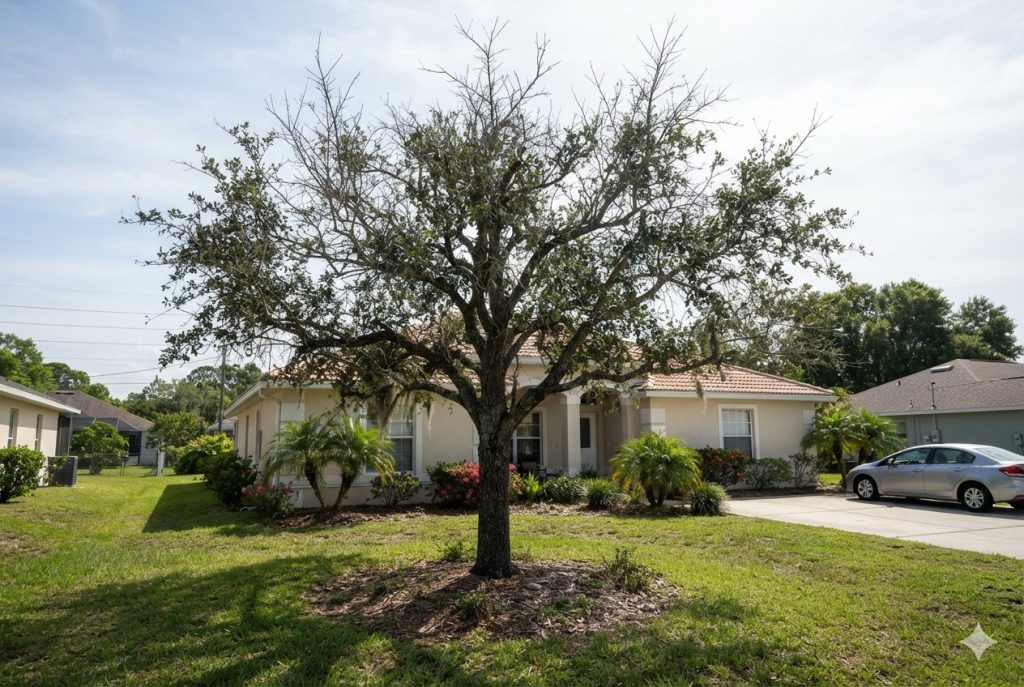
Is Your Tree Dying, Stressed, or Changing Seasonally?
Start by identifying the tree and comparing its appearance with its normal seasonal cycle. Some Florida trees naturally lose leaves for part of the year. Leaf shedding alone does not establish that a tree is dying.
Ask when the change began, whether it affects one branch or the whole canopy, and whether healthy new growth follows. The University of Georgia Extension explains that early leaf loss can reflect temporary stress or a more serious problem. Its tree decline guide is a useful starting point.
7 Signs of a Dying Tree Florida Homeowners Can Observe
1. The canopy keeps getting thinner
Look for a crown that becomes noticeably more open across repeated observations. Compare dated photographs from the same position. Persistent thinning deserves attention, especially when normal seasonal growth does not restore coverage.
2. Branch tips are dying back
Dieback means branches are dying from their tips inward. Note whether bare tips are confined to one section or becoming widespread. Do not stand underneath suspect branches to inspect them more closely.
3. Leaf changes persist or spread
Wilting, browning, unusually small leaves, or early shedding are clues rather than a diagnosis. Record the pattern and timing. Avoid assuming that yellow leaves automatically mean a nutrient deficiency or that extra water will fix the problem.
4. The trunk has concerning changes
Visible cavities, open cracks, damaged bark, or areas of exposed wood warrant closer professional attention. Some species naturally shed bark, so context matters. Photograph changes from a safe distance instead of cutting into the trunk.
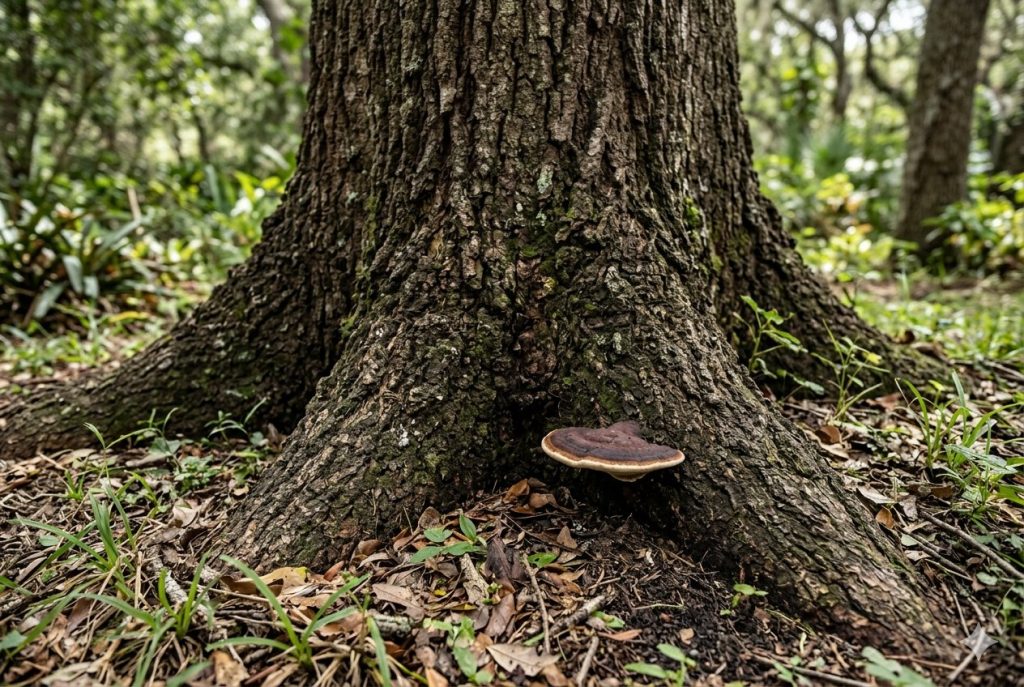
5. Fungal structures appear on the tree
Shelf-like fungi attached to the trunk or root flare may indicate wood decay. Mushrooms scattered across lawn mulch do not establish the same diagnosis. Record exactly where growth appears and ask an arborist to interpret it.
6. Problems follow root-zone disturbance
Think back to trenching, driveway work, added soil, or repeated vehicle traffic near the tree. Root damage may be hidden. UF/IFAS guidance on root problems explains how planting depth, circling roots, and compaction can affect trees.
7. The tree develops a new lean or ground movement
A sudden lean, lifting soil, or a newly opening crack near the base is a safety concern even if the canopy is green. Keep people away and seek prompt professional assessment. These observations relate to stability, not just whether the tree is alive.
Match Your Observation With a Practical Next Step
| What you notice | What to do next |
|---|---|
| Leaf shedding that may match the species and season | Confirm normal behavior and record whether expected new growth appears. |
| Persistent thinning, dieback, or unexplained leaf changes | Arrange a tree health assessment; share photographs and a timeline. |
| Fungi attached to the trunk, cavities, or root damage | Request evaluation of both tree condition and structural concerns. |
| New leaning, lifting soil, a split, or hanging limbs | Keep the area clear and seek prompt professional help. |
If a tree or branch contacts a power line, keep away and contact the electric utility. For an immediate threat to life, contact emergency services. A website inquiry is not an emergency response channel.
What to Record Before Requesting an Assessment
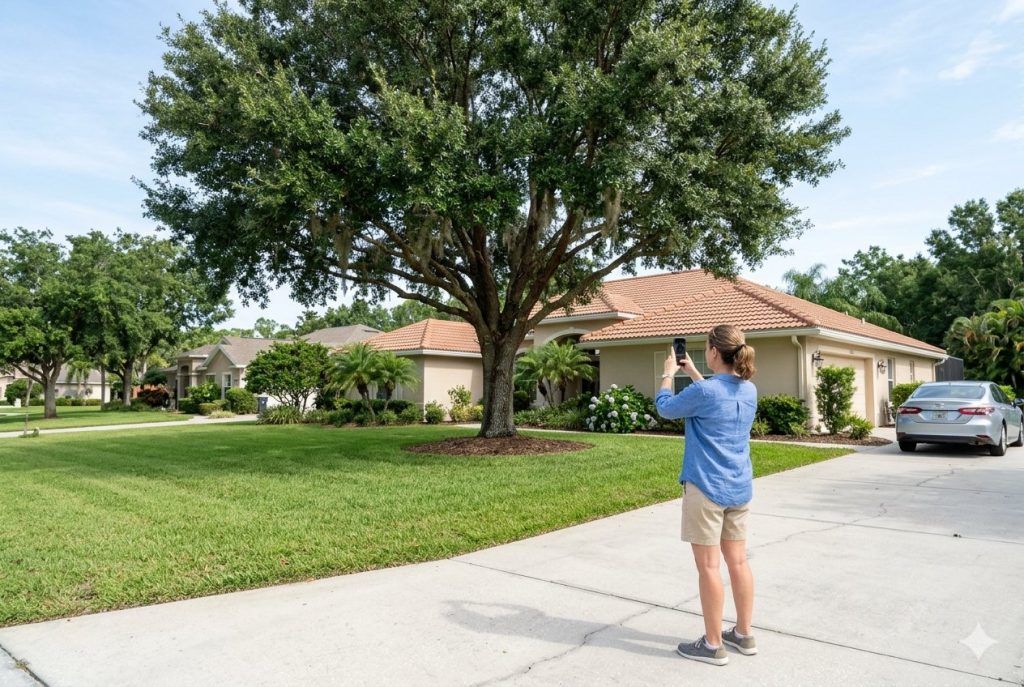
Prepare a short history: when symptoms started, whether they are spreading, and any recent storms, irrigation changes, flooding, or nearby construction. Take a whole-tree photograph, a view of the trunk base, and a closer photograph of symptoms only when safe.
Avoid prescribing treatment from appearance alone. Do not start fertilizing, applying pesticides, heavily pruning, or cutting roots without understanding the cause. Do not climb the tree or use a ladder for inspection.
Florida’s Department of Agriculture and Consumer Services describes oak decline as potentially involving several interacting factors, including root problems and environmental stress. A similar-looking canopy does not prove that two trees have the same problem.
Ask the professional what findings support the diagnosis, whether further testing is needed, and what follow-up would show improvement. If stability is a concern, ask whether a separate tree risk assessment is appropriate. UF/IFAS explains conditions associated with tree failure and why professional evaluation matters.
 ]
Frequently Asked Questions About Dying Trees
Can a tree have green leaves and still be unsafe?
Yes. Foliage does not rule out decay, damaged roots, or weak branch attachments. An assessment should consider structural condition and what a falling part could strike.
Can a declining tree recover?
Sometimes, depending on the cause and extent of damage. An on-site assessment can help distinguish a manageable stress problem from extensive decline. Recovery should not be promised from photographs alone.
Do mushrooms mean my tree must be removed?
No single photograph establishes that conclusion. Location, fungal identification, tree condition, and structural findings matter. Fungi on the trunk or root flare warrant professional evaluation.
Should I wait for the next growing season?
Only when waiting is appropriate for the species and observed condition. New leaning, splits, soil movement, or hanging branches need prompt attention rather than seasonal monitoring.
Discuss a Tree Concern in Wesley Chapel
Noticing signs of a dying tree in Florida is a reason to gather information and seek the right assessment. If you are in Wesley Chapel or nearby Pasco County, email hello@floridatreeconnect.com with your city, ZIP code, observations, and photographs taken safely.
Florida Tree Connect is a referral service. We review requests and may help connect you with an independent provider, subject to availability. Providers confirm their qualifications, assessment scope, pricing, and scheduling directly. Sending an inquiry does not guarantee a match, diagnosis, or response time.
