A large tree near your home can raise questions after a storm, a new crack, or construction nearby. A tree risk assessment in Florida helps turn those concerns into a management decision by considering the tree, its surroundings, and what could be harmed if a part fails.
That is different from simply checking whether the leaves look healthy. A green canopy does not rule out structural problems, and a visible defect does not automatically mean removal is necessary. The right assessment helps explain both the concern and the available options.
For homeowners in Wesley Chapel and nearby Pasco County communities, this guide explains when to call an arborist, how assessment scopes differ, and which questions to ask before acting on a recommendation.
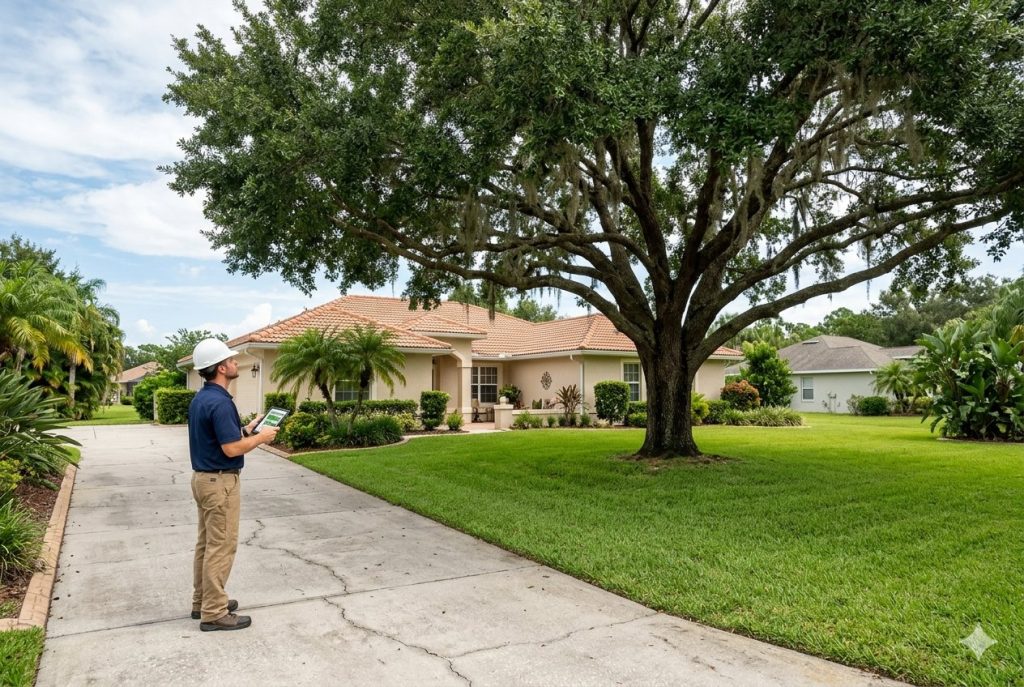
What a Tree Risk Assessment in Florida Considers
Risk involves more than the presence of a defect. The University of Connecticut’s tree risk guidance explains three considerations: the likelihood of a tree or part failing, the likelihood of it striking a target, and the consequences of that impact.
A target can be a person, vehicle, building, or other item that could be affected. An occupied patio and a rarely visited corner of a property create different situations. The assessor considers how the site is used as well as the tree’s condition.
A tree risk assessment in Florida cannot predict an exact failure date or guarantee safety in every storm. Ask what time frame and conditions the findings address, and what could make reassessment necessary.
When to Call an Arborist
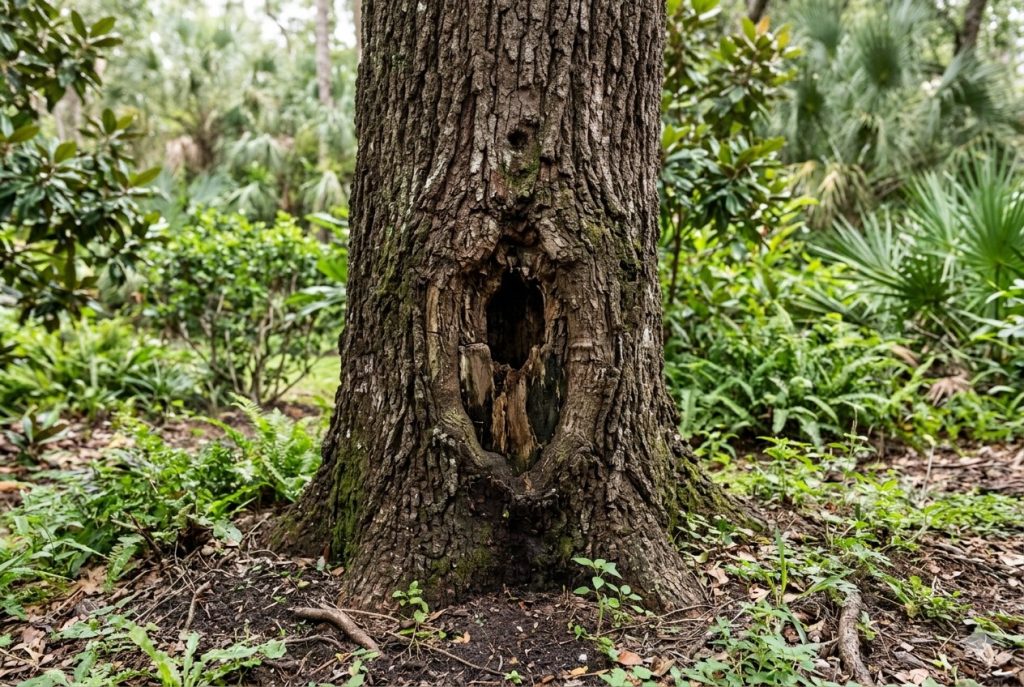
Request advice when you notice a new lean, visible cracks, broken or hanging branches, cavities, fungal growth attached to the tree, or suspected root damage. UF/IFAS describes defects that can increase the likelihood of failure, while emphasizing that their significance depends on the individual tree and site.
Arrange an assessment after substantial storm damage or changes such as trenching, grading, or nearby construction. A new use beneath the canopy, such as a seating area, can also be a reason to review existing conditions.
A rapidly developing lean, moving soil around the base, a fresh split, or a suspended large limb calls for prompt professional attention. Stay clear; do not approach to measure, climb, shake branches, or cut roots. UF/IFAS guidance explains why apparently simple observations may need expert interpretation.
If a tree or branch contacts a power line, keep away and contact the electric utility. For an immediate threat to life, contact emergency services. A website inquiry is not an emergency response channel.
Choose the Right Person and Assessment Scope
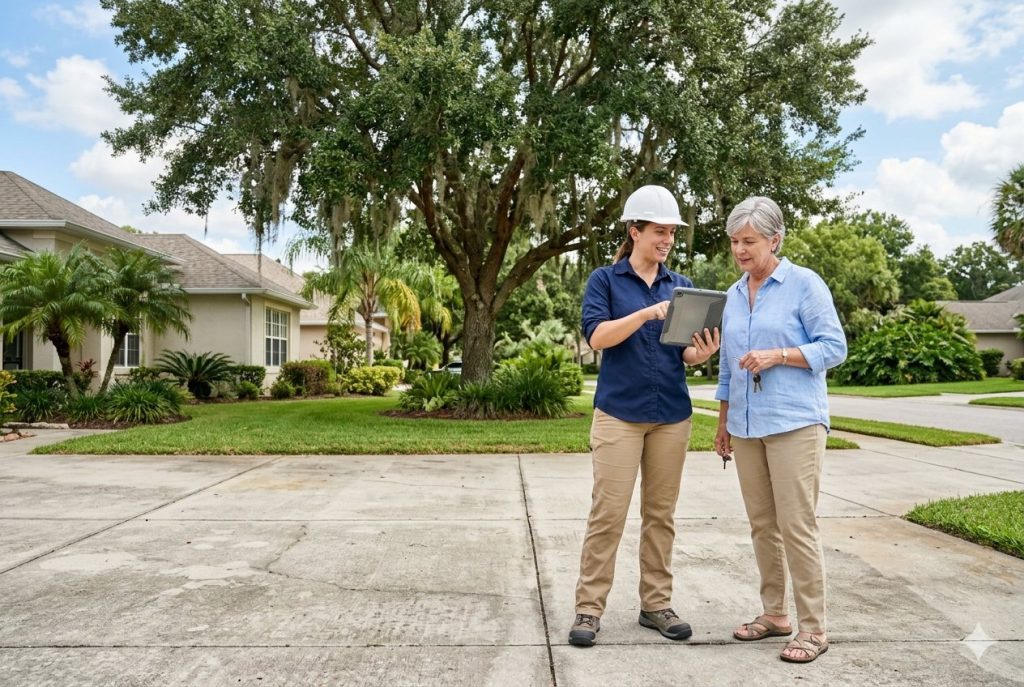
Before booking a tree risk assessment in Florida, ask who will perform it and what relevant training they hold. ISA Certified Arborist and ISA Tree Risk Assessment Qualification, or TRAQ, are different credentials. ISA describes TRAQ as specialized training and assessment in a systematic approach to tree risk.
Use the ISA-linked arborist directory to check credentials, and confirm the name of the person attending. A company’s advertised qualifications do not establish the credentials of every worker.
Also agree on what the appointment includes. Virginia Tech’s Tree Steward Manual distinguishes three assessment levels:
| Assessment level | General scope |
|---|---|
| Level 1: Limited visual | A restricted visual review, often used to identify obvious concerns across multiple trees. |
| Level 2: Basic | A more detailed examination of an individual tree from the ground, considering its accessible sides and surroundings. |
| Level 3: Advanced | Additional investigation selected to answer a specific question, potentially involving specialized equipment or access. |
Not every tree needs advanced testing. Ask why a particular scope is appropriate and what limitations will remain. If you need written findings, confirm that deliverable before agreeing to the fee.
5 Essential Questions About Your Tree Risk Assessment in Florida
1. What was evaluated, and what could not be inspected?
Ask which tree parts and targets were considered. Discuss access restrictions, obscured roots, limited visibility, and whether additional investigation might change the conclusion.
2. Which findings support the recommendation?
Request a plain-language explanation of the observed condition and its significance. Photographs can help document findings, but should be interpreted alongside the on-site assessment.
3. What management options are available?
Depending on the situation, options may include monitoring, pruning, moving a movable target, further assessment, or removal. Ask why the proposed option is appropriate rather than assuming every defect requires removal.
4. What risk remains after the proposed work?
Risk reduction does not eliminate all uncertainty. Ask what the work is intended to change and which concerns would remain. Separate the assessment recommendation from the contractor’s work proposal.
5. When should the tree be reviewed again?
Request a follow-up interval and examples of changes that should trigger earlier contact. Keep the findings, dated photographs, and records of completed work together.
Frequently Asked Questions
Can photographs replace an on-site assessment?
Photographs can help describe the concern, but may miss roots, attachments, decay, and site conditions. They do not establish a complete risk conclusion.
Does a cavity automatically mean a tree must come down?
No. Its significance depends on the defect, tree structure, targets, and other findings. Ask for an assessment of the specific situation.
Is a removal quote the same as a risk assessment?
No. Confirm whether you are buying an evaluation, a written report, or a proposal to perform work. Discuss separate charges and deliverables.
How much does an assessment cost?
Request a quote for the number of trees, assessment scope, access, and reporting required. Advanced investigation may be a separate service.
Discuss a Tree Concern in Wesley Chapel
For a tree risk assessment in Florida, start with your location and the concern you want evaluated. In Wesley Chapel or nearby Pasco County, email hello@floridatreeconnect.com with your city, ZIP code, a short timeline, and photographs taken safely.
Florida Tree Connect is a referral service. We review requests and may help connect you with an independent provider, subject to availability. Confirm assessment qualifications, insurance, scope, pricing, and scheduling directly with the provider. An inquiry does not guarantee a match or response time.
