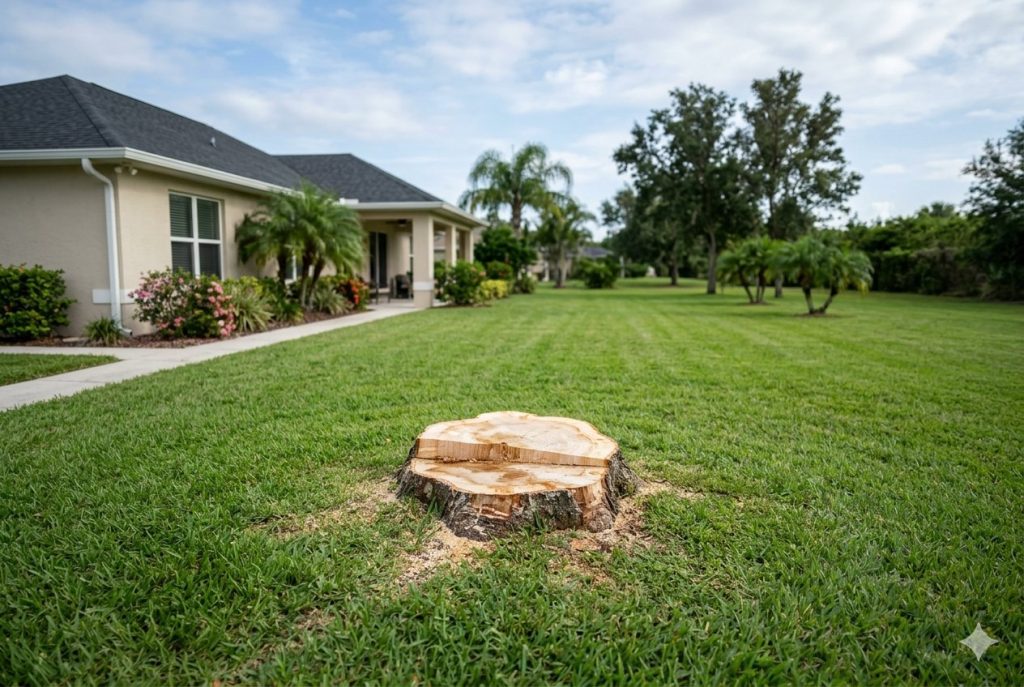
Once a tree has been cut down, the remaining stump can leave an unfinished patch in the yard. Stump grinding after tree removal can reduce that obstruction, but it does not automatically include hauling away chips, replacing soil, or preparing the area for a new tree.
The useful question is not simply whether a provider can grind the stump. It is what result you want afterward: a lawn, a planting bed, or space for a future project. That goal helps define the work before equipment arrives.
For homeowners in Wesley Chapel and nearby Pasco County communities, these seven checks explain what to discuss, what to prepare, and what to expect. Confirm the scope with the independent provider rather than assuming every tree-removal quote includes the same finish.
 ]
What Stump Grinding After Tree Removal Actually Includes
A stump grinder breaks wood into smaller pieces. UF/IFAS describes grinding as one option for dealing with a remaining stump. It is different from excavating an entire root system.
Below-ground wood and roots may remain outside the agreed grinding area. Ask the provider to identify the limits rather than promising a completely root-free yard. If you plan construction or paving, have the project professional confirm what site preparation is required.
7 Essential Checks Before Stump Grinding After Tree Removal
1. Confirm whether grinding is part of the original quote
Read the tree-removal proposal and identify what is included. If grinding is separate, request a written scope. Specify which stump or stumps need attention, and ask whether return visits, cleanup, or access changes affect the quote.
2. Explain how you will use the area
Tell the provider whether you want grass, a garden bed, another tree, or a future structure. These goals can require different preparation. A visibly clear surface is not proof that the ground is suitable for every future use.
3. Agree on the grinding area and depth
Ask how far below the surrounding ground the work will extend and whether visible surface roots are included. There is no single depth to promise for every site. Buried utilities, nearby structures, equipment limits, and your intended use can affect the plan.
4. Review utilities before ground disturbance
Discuss the locate process before scheduling stump grinding after tree removal. Sunshine 811 includes stump grinding in its ground-disturbance guidance. Confirm that the provider follows the current process, including checking utility responses before work.
Member utilities do not mark every private facility. Irrigation, landscape lighting, and lines serving outbuildings may need separate attention. Use Sunshine 811’s guidance to discuss responsibilities; do not assume unmarked ground is clear.
5. Check the equipment route
Share photographs of gates, slopes, narrow passages, paving, and the stump. Measure the narrowest opening and let the provider confirm machine access. Discuss surface protection and nearby plants. Keep children and pets out of the work area and follow the operator’s exclusion-zone instructions.
6. Decide who handles chips, soil, and final grading
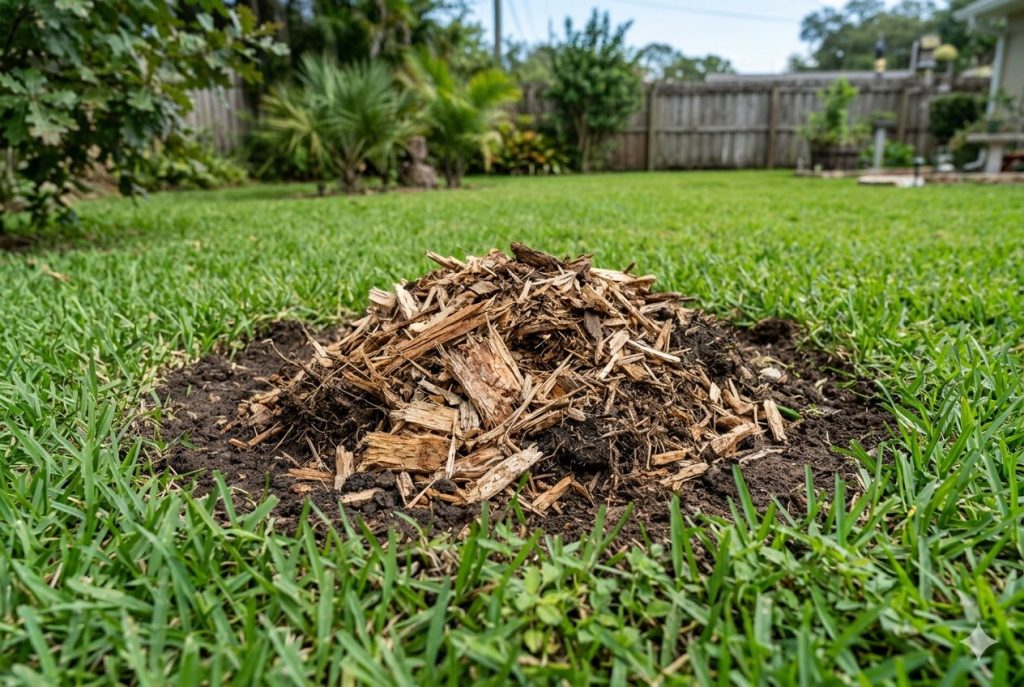
Grinding produces a mixture of wood fragments and soil. Ask whether it will be left, spread, or hauled away. Iowa State Extension notes that chip removal and filling the hole may need to be requested separately. Have the provider list each agreed task.
7. Record the handover and follow-up plan
Before accepting stump grinding after tree removal as complete, compare the result with the written scope. Check the agreed area from a safe position after the machine is shut down and the operator gives clearance. Record any remaining cleanup, backfilling, or later landscaping work.
Plan the Ground Finish Before Replanting
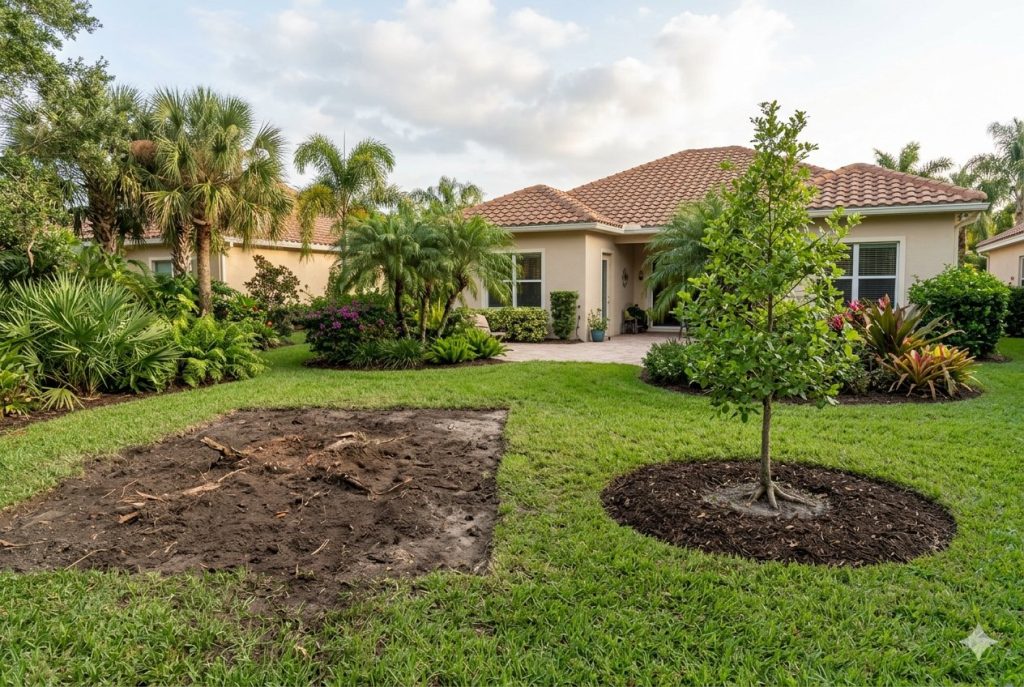
Stump grinding after tree removal is one stage of a landscape project, not a guarantee of planting-ready soil. Large amounts of buried chips can affect the planting environment. Purdue Extension explains that woody debris can affect nitrogen availability and contribute to settling as it decomposes.
| Your next use | What to confirm |
|---|---|
| Lawn | Chip removal, suitable soil, grading, and a grass-establishment plan appropriate to the site. |
| Planting bed | Remaining wood, drainage, usable rooting space, and plant selection. |
| Replacement tree | A suitable planting position and whether the previous tree’s health affects the choice. |
| Paving or construction | Site-preparation requirements confirmed by the professional responsible for that project. |
Do not plant directly into a mound of grinding debris. Iowa State Extension recommends a new planting location where practical, since old roots and altered soil can complicate establishment.
Watch the area for settling and new shoots. UF/IFAS notes that some invasive species can regrow from remaining stump or root tissue. If shoots appear, identify the species and ask for an appropriate management plan rather than applying chemicals without a diagnosis.
 ]
Frequently Asked Questions
Does grinding remove every root?
No. The work is limited to an agreed area and depth. Ask what remains and whether that matters for your next project.
Can it happen on the same day as tree removal?
Possibly, if equipment, access, utility preparation, and scheduling allow. Confirm this with the provider; do not assume same-day service.
Will the provider take the wood chips away?
Only if that is included in the agreement. Ask about hauling, backfill, grading, and lawn restoration separately.
How much will the work cost?
Request a site-specific quote that identifies access, stump dimensions, grinding scope, and cleanup. Compare equivalent scopes rather than a headline price.
Discuss Stump Grinding After Tree Removal in Wesley Chapel
For stump grinding after tree removal in Wesley Chapel or nearby Pasco County, email hello@floridatreeconnect.com with your city, ZIP code, stump photographs, access details, and intended use of the area.
Florida Tree Connect is a referral service. We review requests and may help connect you with an independent provider, subject to availability. Providers confirm scope, qualifications, insurance, pricing, and scheduling directly. An inquiry does not guarantee a match or response time.
